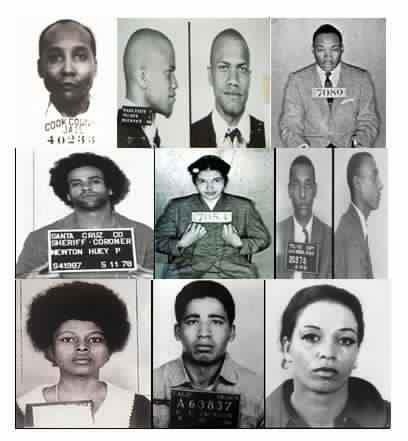
April 16, 2013 marked the 50th anniversary of The Reverend Dr. Martin Luther King, Jr.’s “Letter From Birmingham Jail”. In 1963 King, and literally hundreds of others, continued their long struggle to end racial segregation and the Jim Crow system of demarcation, domination, and destruction that thwarts the vision of the beloved community. The peaceful protests and non-violent actions of these advocates for justice were met with brutality and violence by those with the “legal” authority of government. For their actions many were jailed and provided for the occasion of Dr. King’s historic letter.
With his keen gift of reason and a deep and abiding faith rooted in the transformative power of the lived gospel, King responded to criticism by white church leaders who believed his actions to be “untimely and unwise” and more specifically to the fact that they were influenced by the argument of “outsiders coming in”.
“Injustice anywhere is a threat to justice everywhere”, King argued. “We are caught in an inescapable network of mutuality, tied in a single garment of destiny. Whatever affects one directly, affects all indirectly. Never again can we afford to live with the narrow, provincial ‘outside agitator’ idea.” It should be noted that King’s letter in many ways resembled the letters of the Apostle Paul. Paul, himself, frequently wrote from a prison cell, incarcerated by those with “legal” authority, for preaching the gospel and challenging the status quo.
In many ways, however, we still reject the gospel that seeks to break down dividing walls of hostility and we reject King’s beautifully articulated profound and inescapable truth. We seek the provincial. We seek it not only in our social location but in our thinking and reasoning. We, too often, live our lives in our communities segregated by race, income and education. We compartmentalize and avoid contemplating that which makes us uncomfortable. Literally and figuratively, we “wall ourselves in” and wall others out making real the maxim, “Out of sight and out of mind.”
This year, on the anniversary of the letter, I revisited King’s letter and I could not avoid that inescapable truth. On the anniversary, along with several colleagues in ministry, we were “outsiders coming in” to Death Row at a Maximum Security Correctional Facility. There, we found ourselves with those that society would just as soon forget even exist. Yet, we were meant to be outsiders coming in to partner with each other and learn together- all were teachers and all were learners experiencing a different pedagogy as together we studied the writings of King, Howard Thurman, James Cone, and Walter Brueggemann.
In many ways, while there even for that short period of time, not only did I gain deeper insights about humanity’s relationship with God, I experienced community in ways more weighty and intense than what one often experiences on the outside. I did not expect to experience, on the inside, such joy, faith, hope, and even love among these brothers. While few would argue that those we encountered have anything to do with someone like Dr. King, I would remind us to also remember just how reviled Dr. King was by many “respectable” persons in society.
I know that, in spite of the crimes that these “insiders” may or may not have committed, I experienced a mutuality or affinity with many of them rooted in the fact that we all were created in the image and likeness of God. I am also convinced that as Christians we are called to be in ministry to all persons including those that society has deemed unworthy. As we “outsiders” were leaving the facility, a dear prophetic sister in Christ pointed out the death chamber. That sense of joy, faith, hope, and love felt moments before was quickly mingled with anguish and sorrow.
I believe that we can be concerned about the victims of “crime”, communities that have been ravished by crime, and at the same time be concerned about those on the inside. I believe that the gospel challenges us to move beyond our parochialism, to seriously re-think prison and the failure of our criminal justice system and to even re-think our concepts of justice.
Keep on loving one another as brothers and sisters. Do not forget to show hospitality to strangers, for by so doing some people have shown hospitality to angels without knowing it. Continue to remember those in prison as if you were together with them in prison, and those who are mistreated as if you yourselves were suffering. Hebrews 13:1-3
 Just Peace Cafe
Enjoyed reading your thoughts. I too live with this plaguing reality everyday as I seek to fulfill the call to ministry, and how I might respond to this great need to abolish/restructure our criminal justice system. I realize that every little bit that we do “in the name of the Lord” helps to deconstruct the oppressive system on the minds of those who have been marginalized. And even though it may not ‘be enough’, I am convinced that a better day lie ahead; so long as we continue to reach beyond the “wall” that separates us.